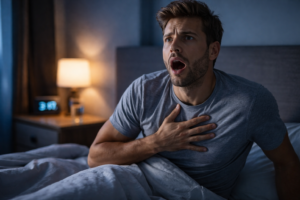
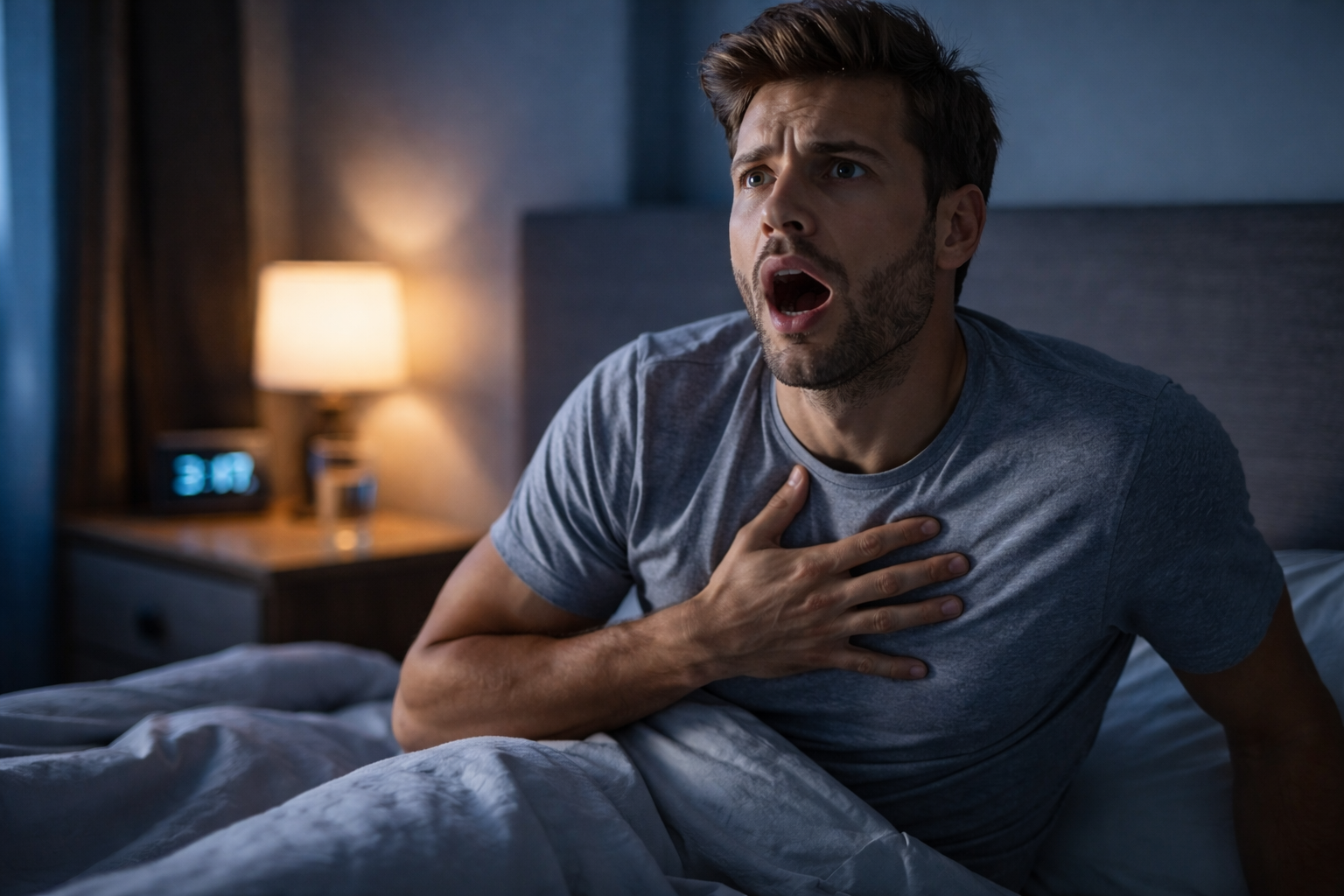
Waking up suddenly at night feeling like you can’t breathe is a frightening experience. Many people describe it as choking, gasping, or a sudden rush of air that jolts them awake. While occasional breathing discomfort may be related to temporary factors, repeated nighttime breathing disturbances are often a sign of an underlying sleep-related condition that should not be ignored.
At Sonno Sleep Center, patients frequently seek help after months—or even years—of disrupted sleep caused by unexplained breathing issues at night. Understanding why these episodes occur is the first step toward restoring safe, restorative sleep.
What Does It Mean to Wake Up Gasping for Air?
Waking up gasping for air typically occurs when breathing becomes restricted or pauses during sleep, triggering the brain to abruptly wake the body to restore airflow. This response is a protective reflex, but it comes at the cost of interrupted sleep and elevated stress levels.
These episodes often happen without conscious awareness of what caused them, making them easy to dismiss or misattribute to anxiety or bad dreams.
Why Nighttime Breathing Feels Worse Than Daytime Breathing
During sleep, muscle tone throughout the body naturally decreases—including the muscles that help keep the airway open. For some individuals, this relaxation causes partial or complete airway collapse, leading to shortness of breath during sleep.
Unlike daytime breathing difficulties, nighttime episodes are more alarming because they occur suddenly and disrupt the body’s normal sleep cycle, often accompanied by a racing heart or sense of panic.
Common Signs of Nighttime Breathing Problems
Breathing disturbances during sleep may not always involve loud snoring. Some people experience quieter but equally dangerous airflow limitations known as nighttime breathing problems.
Warning signs include:
- Sudden awakenings with a feeling of suffocation
- Rapid or shallow breathing upon waking
- Dry mouth or sore throat in the morning
- Morning headaches
- Unrefreshing sleep despite adequate time in bed
These symptoms suggest that breathing may be compromised during the night.
The Role of Sleep Apnea in Nighttime Breathing Episodes
One of the most common medical causes of nighttime gasping is obstructive sleep apnea. This condition occurs when airway tissues collapse repeatedly during sleep, blocking airflow and reducing oxygen levels.
Typical sleep apnea breathing symptoms include disrupted breathing patterns, brief awakenings throughout the night, and poor sleep quality—even if the individual is unaware of these interruptions.
Because the body prioritizes breathing over sleep, the brain repeatedly forces awakenings to restore airflow.
How Oxygen Levels Change During Sleep
Healthy sleep involves stable breathing and consistent oxygen delivery to the brain and body. When breathing becomes restricted, oxygen drops during sleep, placing stress on vital organs.
These repeated oxygen fluctuations can lead to:
- Increased heart rate and blood pressure
- Strain on the cardiovascular system
- Impaired cognitive function
- Increased inflammation
Over time, this physiological stress contributes to serious health risks if left untreated.

Why These Episodes Are Often Misdiagnosed
Many individuals assume nighttime gasping is related to anxiety, acid reflux, or stress. While these factors can contribute, they rarely explain repeated breathing disruptions throughout the night.
Because symptoms occur during sleep, people may underestimate their frequency or severity. This is why professional evaluation is essential when nighttime breathing issues persist.
How Nighttime Breathing Issues Affect Sleep Quality
Every episode of gasping fragments sleep architecture. Instead of progressing smoothly through restorative sleep stages, the brain is repeatedly pulled into lighter stages or full wakefulness.
Over time, this leads to:
- Chronic fatigue
- Daytime sleepiness
- Poor concentration
- Mood disturbances
- Reduced quality of life
Even if total sleep time seems adequate, the sleep itself is not restorative.
Who Is at Higher Risk for Nighttime Breathing Problems
Certain factors increase the likelihood of breathing disturbances during sleep, including:
- Narrow airway anatomy
- Excess weight
- Family history of sleep disorders
- Nasal obstruction or congestion
- Smoking or alcohol use before bedtime
However, breathing-related sleep disorders can affect individuals of all ages and body types.
Why a Sleep Study Is Critical for Diagnosis
Because breathing disruptions cannot be reliably identified through symptoms alone, objective testing is often required. A sleep study for breathing issues allows specialists to monitor airflow, oxygen levels, heart rate, and brain activity throughout the night.
This data provides a clear picture of whether breathing interruptions are occurring, how often they happen, and how severely they impact sleep and oxygenation.
At Sonno Sleep Center, sleep studies are conducted in a controlled, comfortable environment designed to capture accurate results.
What Happens After a Diagnosis
Once the cause of nighttime breathing disruptions is identified, treatment can be tailored to the individual. Effective management often leads to:
- Fewer nighttime awakenings
- Improved oxygen stability
- Better sleep quality
- Increased daytime energy
- Reduced long-term health risks
Many patients report significant improvement within weeks of starting appropriate treatment.
Long-Term Risks of Ignoring Nighttime Breathing Symptoms
Untreated breathing disorders during sleep can contribute to serious health complications, including:
- Cardiovascular disease
- Hypertension
- Stroke
- Cognitive decline
- Increased accident risk
Early evaluation and intervention are key to preventing these outcomes.
Conclusion
Waking up short of breath at night is not something to ignore or normalize. These episodes are often the body’s alarm system signaling disrupted breathing and reduced oxygen during sleep. Identifying the underlying cause through proper evaluation can restore restful sleep, protect long-term health, and bring peace of mind. With expert care and targeted treatment, safe and restorative sleep is achievable again.