

Difficulty sleeping is one of the most common health complaints among adults today. Busy schedules, constant connectivity, and daily pressures often leave people lying awake at night, wondering why restful sleep feels so elusive. While stress is a frequent culprit, not all sleep difficulties can be explained by lifestyle alone.
At SONNO SLEEP CENTER, many patients arrive convinced their sleep problems are simply the result of stress—only to discover that an underlying medical condition is playing a significant role. Understanding the difference is essential for finding the right solution and restoring healthy sleep.
Why Stress Often Gets Blamed for Sleep Issues
Stress activates the body’s “fight-or-flight” response, increasing heart rate, muscle tension, and mental alertness. When this response remains active at night, falling asleep or staying asleep becomes difficult.
Temporary sleep disturbances caused by stress are common during major life changes, work deadlines, or emotional challenges. In these cases, sleep usually improves once the stressor is resolved and the nervous system calms down.
However, when sleep difficulties persist long after stress levels should have normalized, it may indicate something more than situational stress.
Stress vs. Sleep Disorder: Key Differences
Distinguishing between stress vs sleep disorder can be challenging because symptoms often overlap. Both can cause difficulty falling asleep, nighttime awakenings, and daytime fatigue. The key difference lies in duration, consistency, and physical impact.
Stress-related sleep issues typically:
- Occur during identifiable stressful periods
- Improve with relaxation or time off
- Fluctuate night to night
Sleep disorders, on the other hand, often:
- Persist for months or years
- Occur regardless of stress levels
- Interfere with breathing, movement, or sleep cycles
- Lead to chronic daytime symptoms
Recognizing these patterns is an important step toward proper diagnosis.
Common Medical Causes of Ongoing Sleep Disruption
Several medical conditions can interfere with sleep quality, often without obvious symptoms during the night. These conditions may cause frequent micro-awakenings that the sleeper does not remember.
Some of the most common insomnia causes linked to medical issues include:
- Obstructive sleep apnea
- Restless legs syndrome
- Circadian rhythm disorders
- Chronic pain conditions
- Hormonal imbalances
Because these disruptions happen subconsciously, many people assume they are sleeping through the night—even when their sleep is highly fragmented.
The Role of Anxiety in Sleep Difficulties
Anxiety is one of the most misunderstood contributors to sleep disruption. While stress is usually tied to specific situations, anxiety tends to be more persistent and internalized.
Anxiety and sleep issues often create a cycle where worry interferes with sleep, and poor sleep worsens anxiety the next day. Over time, this pattern can become self-sustaining, even if the original trigger has resolved.
Unlike temporary stress-related sleep loss, anxiety-driven sleep problems may require targeted treatment to break the cycle and restore restful sleep.
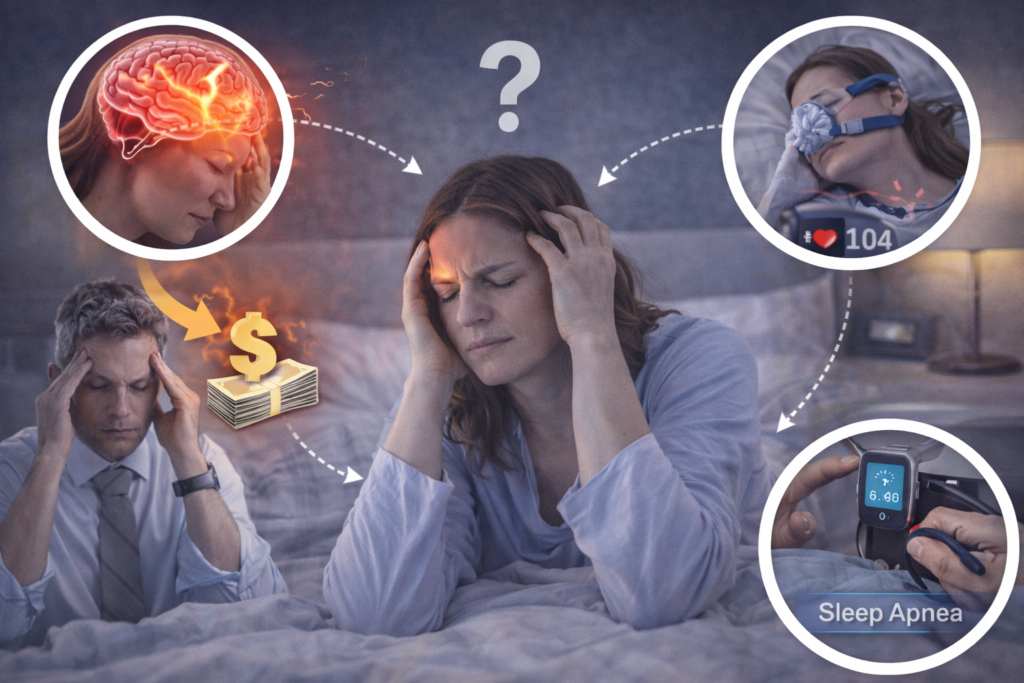
Signs Your Sleep Issue May Be Medical
Certain symptoms suggest that sleep difficulties may be caused by an underlying condition rather than stress alone.
Warning signs include:
- Loud or chronic snoring
- Gasping or choking during sleep
- Waking up with headaches
- Persistent daytime sleepiness
- Difficulty concentrating or memory problems
- Irritability or mood changes
- Feeling unrefreshed despite adequate sleep time
When these symptoms are present, sleep disruption may be affecting physical health, not just energy levels.
Why Chronic Sleep Disruption Is a Serious Concern
Occasional poor sleep is a normal part of life. However, ongoing sleep loss has cumulative effects on nearly every system in the body.
Chronic sleep disruption can contribute to:
- Cardiovascular disease
- Weakened immune function
- Weight gain and metabolic issues
- Increased risk of anxiety and depression
- Reduced cognitive performance
Because these effects develop gradually, many people underestimate the seriousness of persistent sleep problems.
When Stress Management Isn’t Enough
Many individuals attempt to resolve sleep difficulties with relaxation techniques, supplements, or lifestyle changes. While these strategies can be helpful, they may not be sufficient when a medical condition is involved.
If sleep problems persist despite:
- Improved sleep habits
- Reduced caffeine or alcohol use
- Stress reduction efforts
- Consistent sleep schedules
…it may be time to look beyond stress as the primary cause.
When to See a Sleep Specialist
Knowing when to see a sleep specialist can make a critical difference in long-term health and quality of life. A professional evaluation is especially important if sleep difficulties interfere with daily functioning or last longer than a few weeks.
Sleep specialists can:
- Identify hidden sleep disorders
- Evaluate breathing and oxygen levels during sleep
- Assess sleep architecture and cycles
- Recommend evidence-based treatments
- Create personalized care plans
At SONNO SLEEP CENTER, comprehensive sleep evaluations help patients understand the true cause of their sleep difficulties and move toward effective treatment.
How Sleep Studies Clarify the Cause
Sleep studies provide objective data that cannot be obtained through symptoms alone. These studies monitor brain activity, breathing patterns, heart rate, oxygen levels, and movement throughout the night.
For many patients, seeing this data is a turning point—it confirms that their sleep issues are real, measurable, and treatable.
The Importance of Early Diagnosis
The earlier sleep disorders are identified, the easier they are to manage. Early diagnosis can prevent years of fatigue, frustration, and declining health.
Addressing sleep issues promptly also reduces the risk of long-term complications and improves overall well-being.
Conclusion
Not all sleep difficulties are created equal. While stress can certainly interfere with rest, persistent sleep issues may signal an underlying medical condition that requires professional care. Understanding the difference empowers individuals to seek the right help and avoid years of unnecessary struggle. With proper evaluation and treatment, restorative sleep is achievable, supporting better health, improved energy, and a higher quality of life.